

Why Doesn’t The Bible Mention Race?
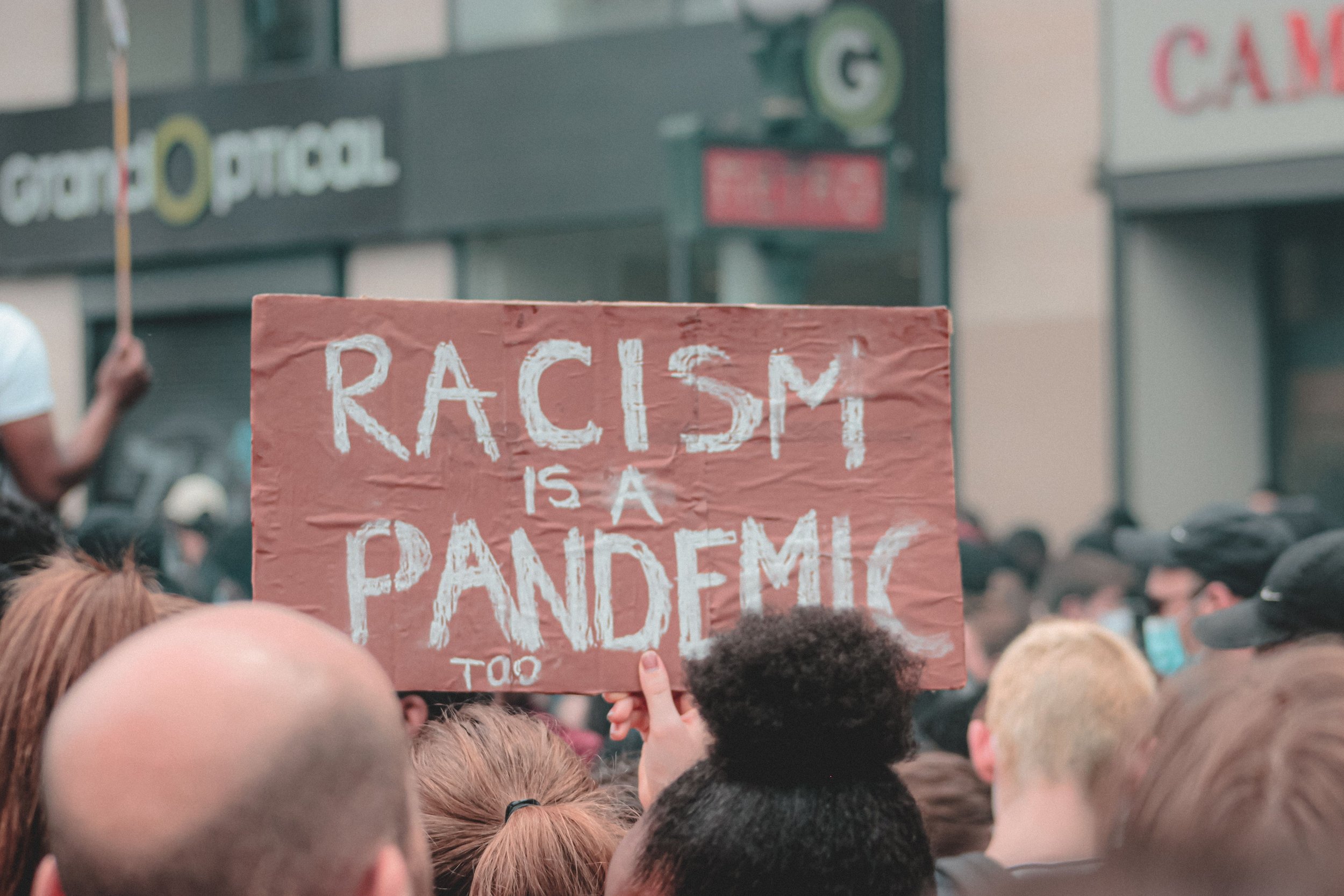
Genesis 1:26 says God created humanity in His image. No matter our skin color, we all reflect the Creator and Perfecter of all things. That means we must treat one another with dignity and respect. No racial group should be seen as superior or inferior.
Racial tension isn’t new, but the way we talk about it today definitely is. Within the last 250 years, America and many parts of the world have dealt with deep issues of racial discrimination. European slavery of African peoples—beginning in the late 15th century and ending in the mid‑19th century—left unhealed wounds and generational trauma in many Black Americans, as well as those in the Caribbean, South America, and Africa.
Whenever white Americans or people of other races who don’t fall into the category of Black attack or oppress* a Black individual or group, many Black people are reminded of the history of their enslaved ancestors. It often feels like the remnants of the same oppression—or a new version of it—are still showing up today.
Over the last thirty years, some people (mostly whites and others outside the Black community) have argued that Black people aren’t being oppressed, but instead have adopted a “victim mentality” to escape the consequences of their lived experiences. Meanwhile, the media often amplifies racial tension by highlighting stories of Black victims and white perpetrators, using language that suggests race is the cause. We’ve seen how this sparks anger and outcry in the Black community, like with the Trayvon Martin case and the wave of police brutality protests in 2020.
So the real question becomes: What does God’s word say about race, and how should Christians respond?
What Does the Bible Say About Race?
The Bible doesn’t use the racial categories we use today. It never identifies anyone as “Black” or “white.” Instead, people are described by tribes, nations, and ethnic groups (Revelation 7:9; 14:6).
Even when we look at categories like Asian, American Indian, or Hispanic/Latino, these align more with regions, which is exactly how the Bible identifies people (Ezekiel 25:1–16). Skin color isn’t the focus.
But the categories “White” and “Black” create a unique problem. They sit on opposite ends of the color spectrum—yin and yang, good versus evil, hot and cold. They’re opposites by design, and that alone creates division.
And honestly, neither label is literally true. No one is actually white, and no one is truly black-skinned. We all have the same number of melanocytes; we just produce different amounts of melanin depending on where our ancestors lived.
Maybe that’s why the Bible doesn’t use our modern labels. Instead, it uses regions—because we are one, and God views all people the same (Psalm 22:27; 86:9; Galatians 3:28).
The modern concept of race was heavily influenced by Charles Darwin in The Descent of Man. He placed white people at the top of society and labeled Black and Indigenous groups as less evolved. These ideas still show up in education and culture today, even while God’s word has been pushed aside.
Jesus and the Samaritan Woman
Does the Bible include stories that reflect what we’d call racial tension today? Absolutely.
In John 4, Jesus travels through Samaria and sits by a well in Sychar. A Samaritan woman comes to draw water, and Jesus asks her for a drink. She immediately points out the tension between their groups:
“‘You are a Jew,” she replied, “and I am a Samaritan woman. How can you ask me for a drink of water when Jews and Samaritans won’t have anything to do with each other?”’ (John 4:9 CEV)
Jesus doesn’t get angry. He doesn’t accuse her of oppression. He doesn’t react in the flesh. Instead, He brings truth:
“‘You don’t know what God wants to give you, and you don’t know who is asking you for a drink. If you did, you would ask me for the water that gives life.”’ (John 4:10 CEV)
After revealing details about her life (John 4:16–18), she believes and runs to tell her whole town about the Messiah (4:28–30).
There’s a lesson here for Black people today: When we encounter racial tension, we need a spiritual mindset. If Jesus had responded in the flesh, the tension would’ve escalated, and the woman might never have believed. The story would’ve ended in division just like many racial conflicts do today.
There Is Only One Race
Genesis 1:26 says God created humanity in His image. No matter our skin color, we all reflect the Creator and Perfecter of all things. That means we must treat one another with dignity and respect. No racial group should be seen as superior or inferior.
Racial discrimination comes from the doctrine of demons—Satan deceiving people into believing there are human differences based on skin color, and that God must be lying when He says He has no favorites (Revelation 12:9; Romans 2:11; 1 Peter 1:17; Acts 10:34).
Black people and anyone facing discrimination should look up to God for help. Instead of relying on earthly definitions and narratives, Black Christians should look toward God’s word to understand racial and tribal tension and how to respond. Satan wants division. He wants to block God’s kingdom agenda.
But God’s kingdom includes all tribes, nations, and languages. So we can’t let the enemy blind us with false ideas about race. We must practice the truth of God’s word (Revelation 7:9).
