

Did Christianity Keep Ethiopia From Colonization?
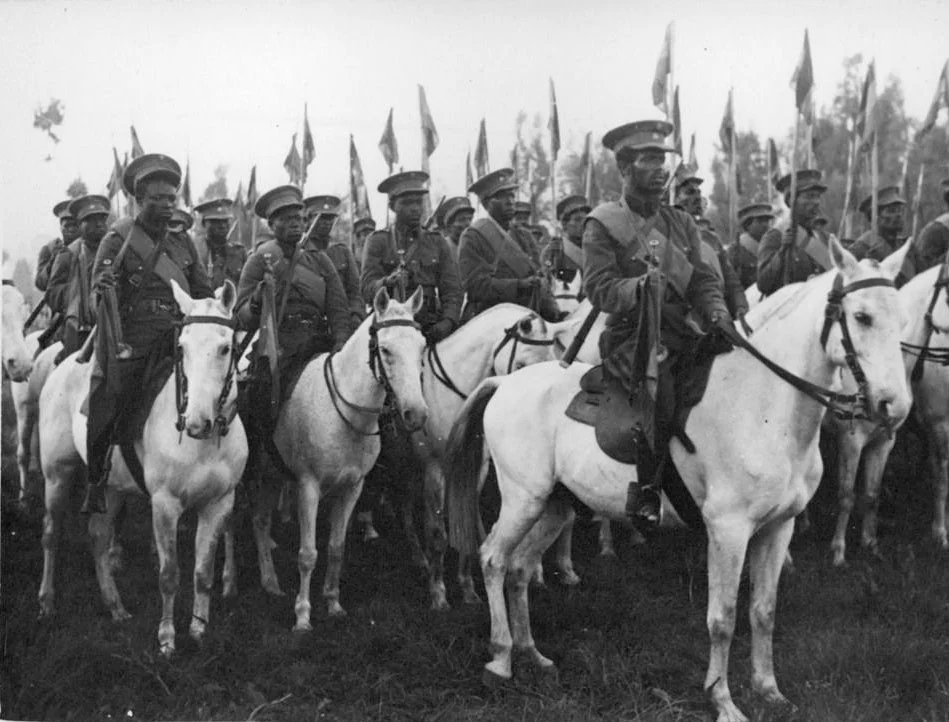
Ethiopia stands as a symbol of Black resilience, Christian endurance, and divine protection. Its survival wasn’t luck — it was God’s mercy.
Ethiopia isn’t just another African country; it’s one of the oldest nations on earth, with a history stretching back over 2,000 years. It’s also one of the earliest Christian civilizations, home to the Ethiopian Orthodox Tewahedo Church, a denomination older than many European nations. Ethiopia shows up in the New Testament (Acts 8:26-40), and many believe the biblical land of Cush refers to modern-day Ethiopia.
While Christianity existed in Egypt and Sudan, Ethiopia is unique because it held onto its Christian identity for thousands of years, even as Islam spread across North and East Africa. Ethiopia remained independent, spiritually and politically, long before colonizers set foot on the continent.
But when European powers began carving up Africa, Ethiopia stood out — the one African nation that refused to be conquered. That is, until Benito Mussolini tried to change history.
Mussolini’s Occupation of Ethiopia
Benito Mussolini, Italy’s fascist dictator and ally of Adolf Hitler, ruled from 1925 to 1945. He wanted Italy to be a global empire, but Italy lacked economic strength and military dominance. So Mussolini set his eyes on Ethiopia — not just for land, but for revenge.
Back in 1896, Italy suffered a humiliating defeat at the Battle of Adwa, where the Christian Ethiopian emperor Menelik II crushed over 7,000 Italian soldiers. This victory made Ethiopia a symbol of Black resistance worldwide.
Mussolini couldn’t let that go. He launched propaganda campaigns calling Ethiopians “inferior” and “uncivilized,” claiming Italy needed to “fix” them. But God had other plans.
In October 1935, Italy invaded Ethiopia, forcing Emperor Haile Selassie into exile. The Black diaspora erupted in outrage. W.E.B. Du Bois and others demanded that the League of Nations punish Italy. Selassie himself addressed the League, calling the invasion a violation of peace.
When Mussolini declared war on Britain in 1940, British and Ethiopian forces united. By 1941, they reclaimed Ethiopia, defeated Italy, and restored Haile Selassie to the throne. Ethiopia’s sovereignty — and its Christian identity — survived.
The Rastafarian Movement That Harmed Christianity
While Ethiopia was fighting for its life, a new movement was rising in Jamaica: Rastafarianism. Founded in 1935 by Leonard P. Howell, it taught that Haile Selassie was divine, the Black Messiah, and that Black people were superior to whites. It borrowed ideas from Marcus Garvey and created a theology that spread quickly across the Caribbean.
When Selassie was exiled, he prayed to God for justice and restoration. His 1936 speech before the League of Nations shows his faith clearly:
“I pray to Almighty God that He may spare nations the terrible sufferings that have just been inflicted on my people… Apart from the Kingdom of the Lord there is not on this earth any nation that is superior to any other.”
Selassie never converted to Rastafarianism, but he also never condemned it. When he visited Jamaica in 1966, he was welcomed like a god.
But in 1974, after economic instability, Selassie was overthrown by dictator Mengistu Haile Mariam, who was the last emperor of Ethiopia. He died a year later, leaving many Rastafarians confused, because a god cannot die.
Did Rastafarianism Lead to Ethiopia’s Invasion?
We can’t say definitively that Rastafarianism caused the Italian invasion. But Scripture shows a pattern: Whenever God’s people embraced idolatry, invasion followed.
Examples:
Judges 6
God’s people did evil, so “the Lord handed them over to Midian” (Judges 6:1–2).
2 Kings 18
The king of Assyria deported Israel because “they did not listen to the Lord and violated his covenant” (2 Kings 18:11–12).
Rastafarianism — which declared a man to be god — emerged the same year Italy invaded Ethiopia. The timing is striking.
But here’s the key: Haile Selassie never abandoned his faith. He prayed, trusted God, and was restored to his throne. Ethiopia survived colonization, and Christianity remains strong there today.
What Can Black People Learn From Ethiopia?
Ethiopia’s story shows the power of holding onto Christ. When nations, movements, or ideologies try to replace God, destruction follows. But when leaders cling to God, even in exile, restoration comes.
Ethiopia stands as a symbol of Black resilience, Christian endurance, and divine protection. Its survival wasn’t luck — it was God’s mercy.
For the Black diaspora, Ethiopia is a reminder: When we stay rooted in Christ, no enemy, no ideology, and no empire can destroy what God protects.
