

How Christianity Influenced Haiti’s Independence from France
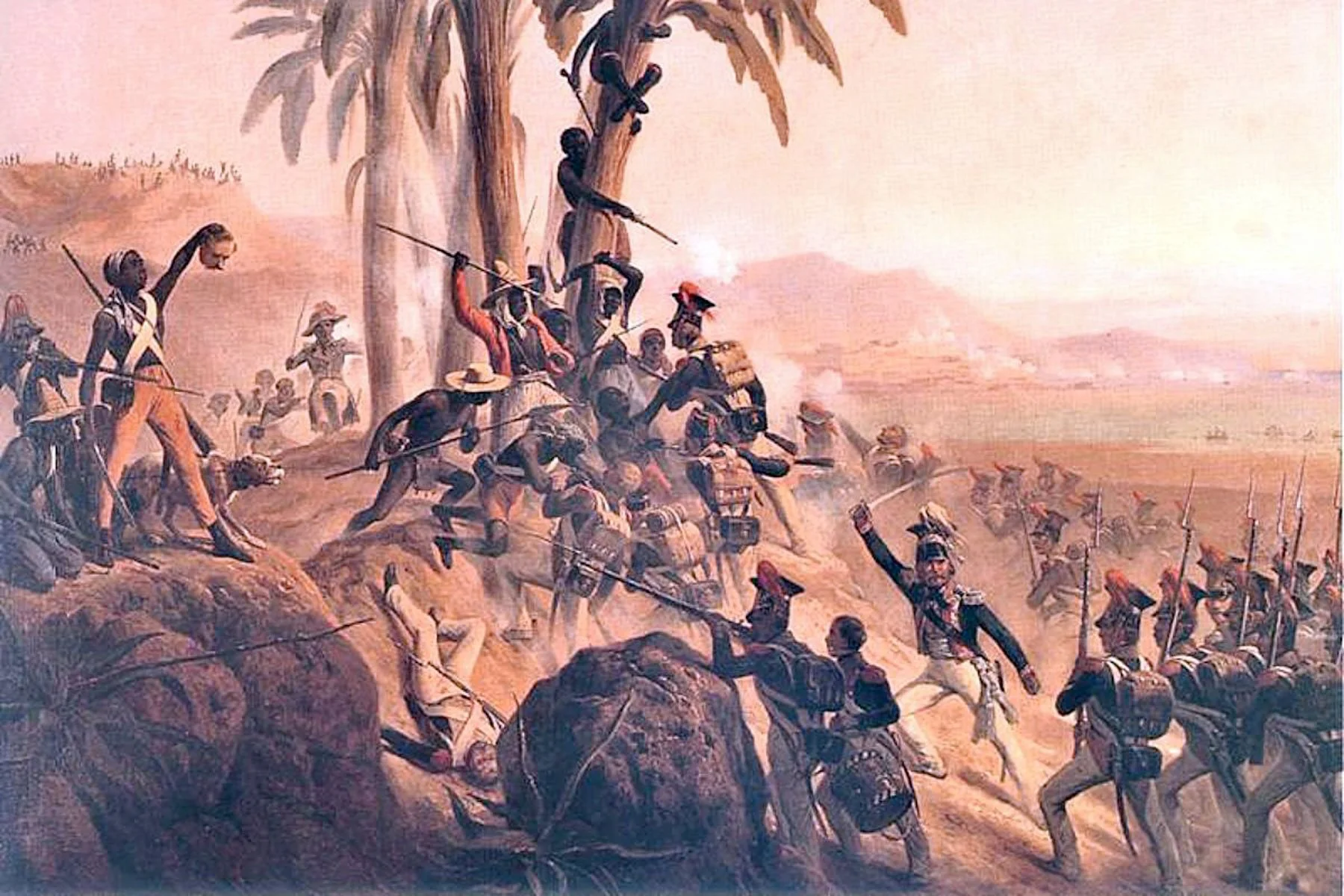
Haiti’s story began with faith, and its restoration will only come through faith.
When we talk about Haiti, the first Black republic in the world, we’re talking about a nation born out of fire, faith, and a refusal to bow to oppression. Enslaved Africans on the island of Saint-Domingue endured some of the most brutal, demonic conditions in the Western Hemisphere. Yet rebellion after rebellion broke out because the Haitian people refused to accept slavery as their destiny.
And at the center of this story stands a man whose faith shaped a revolution: Toussaint L’Ouverture.
The Rise of Toussaint L’Ouverture
Toussaint was born enslaved between 1739 and 1746. His father is believed to have been the son of the King of Benin, a royal stolen and chained by the French. Toussaint eventually gained his freedom in 1776 and even owned a coffee plantation where he used enslaved labor, reflecting the complex realities of the time.
But everything changed in 1791.
A Vodou ceremony led by Dutty Boukman is often credited as the spark of the Haitian Revolution. However, around the same time, Toussaint underwent a transformation of conscience. He no longer wanted better treatment for enslaved people; he wanted slavery abolished completely.
He rose as a brilliant strategist, uniting the island and becoming governor for life. But when Napoleon Bonaparte took power in France, he captured Toussaint and imprisoned him. Toussaint died in a cold French cell in 1803.
Yet his dream lived on.
Jean-Jacques Dessalines carried the revolution to victory, declaring Haiti independent in 1804.
Toussaint’s Faith in Christ
Toussaint wasn’t just a military genius; he was a devout Catholic who believed deeply in God’s justice. He once said:
“God, who knows our most secret thoughts and who sees all, is witness to the purity of my principles. They are not founded on this barbarous ferocity that takes pleasure in shedding human blood.”
Even though Vodou was widely practiced on the island, Toussaint held onto Christ because he believed Haiti’s freedom would come from God, not spirits.
His Catholic upbringing may have come through French influence, but Scripture reminds us that God reaches people through the Holy Spirit, not through human agendas (Ephesians 1:13-14).
In 1801, Toussaint made Catholicism the state religion of Haiti and wrote it into the constitution. He ordained priests and sought recognition from the Roman Papacy, though it was denied, with the claim being due to church structure issues in Haiti.
Sadly, in 1987, the Duvalier regime, which embraced Vodou, removed Catholicism from the constitution entirely.
Haiti’s First President and the Loss of Christian Leadership
After Toussaint’s death, Dessalines became Haiti’s first leader. But unlike Toussaint, Dessalines did not anchor his leadership in Christianity. He embraced all religions and, in 1805, removed Haiti’s state religion entirely.
Toussaint believed in equality because Christianity teaches that all people are made in God’s image. Dessalines did not share this conviction.
In retaliation for the French Rochambeau drowning of 500 Haitians, Dessalines ordered the killing of 500 white men. This act shocked the U.S. and Britain and damaged Haiti’s global reputation for a while.
Fearful of future retaliation, Dessalines later ordered the execution of all remaining white men on the island. His rule became harsh, mirroring the brutality of the French slaveowners.
In 1806, he was assassinated by rivals who saw him as a tyrant.
Without Christianity and wise leadership, Haiti’s early stability crumbled.
The False Belief That Vodou Saved Haiti
Many today claim Vodou, especially the Bwa Kayiman ceremony, is what freed Haiti. But several questions challenge that idea:
If Vodou saved Haiti, why didn’t it stop slavery in the first place, since it existed long before Europeans arrived?
Why couldn’t Vodou help Dessalines maintain power or build a stable government?
Why did Dessalines seek Toussaint’s Christian-based political and economic guidance?
Why did the Duvaliers, who practiced Vodou, lead Haiti into one of its darkest eras?
Why didn’t Vodou free other enslaved nations?
History shows a pattern: Christianity has been present in many major Black liberation movements.
Christianity is not the “white man’s religion.”
It was in Africa long before Europeans went on their exploration of the continent.
It kept Ethiopia from Italian colonization.
It shaped Haiti’s revolution through Toussaint.
It shaped the Civil Rights Movement through Martin Luther King Jr.
Jesus said:
“You will know the truth, and the truth will set you free.” - John 8:32
And that truth has repeatedly empowered Black people to fight for freedom.
Haiti Today: A Nation in Need of God’s Restoration
Right now, Haiti has no president.
Gangs control the streets.
Millions face hunger and extreme poverty.
The nation feels abandoned.
But Scripture reminds us:
“With God all things are possible.” - Matthew 19:26
Haiti needs a leader who fears God, loves justice, and unites the people under Christ’s authority.
Our prayer should be for God to forgive, restore, and heal Haiti, to raise a leader who governs with righteousness, not corruption.
Because Scripture says:
“Where there is no guidance, a people falls…” - Proverbs 11:14
“The king gives stability to the land by justice…” - Proverbs 29:4
“By me kings reign, and rulers decree what is just…” - Proverbs 8:15-16
“It is an abomination to kings to do evil…” - Proverbs 16:12
“The king who judges the poor with fairness, his throne will be established forever.” - Proverbs 29:14
Haiti’s story began with faith, and its restoration will only come through faith.
